
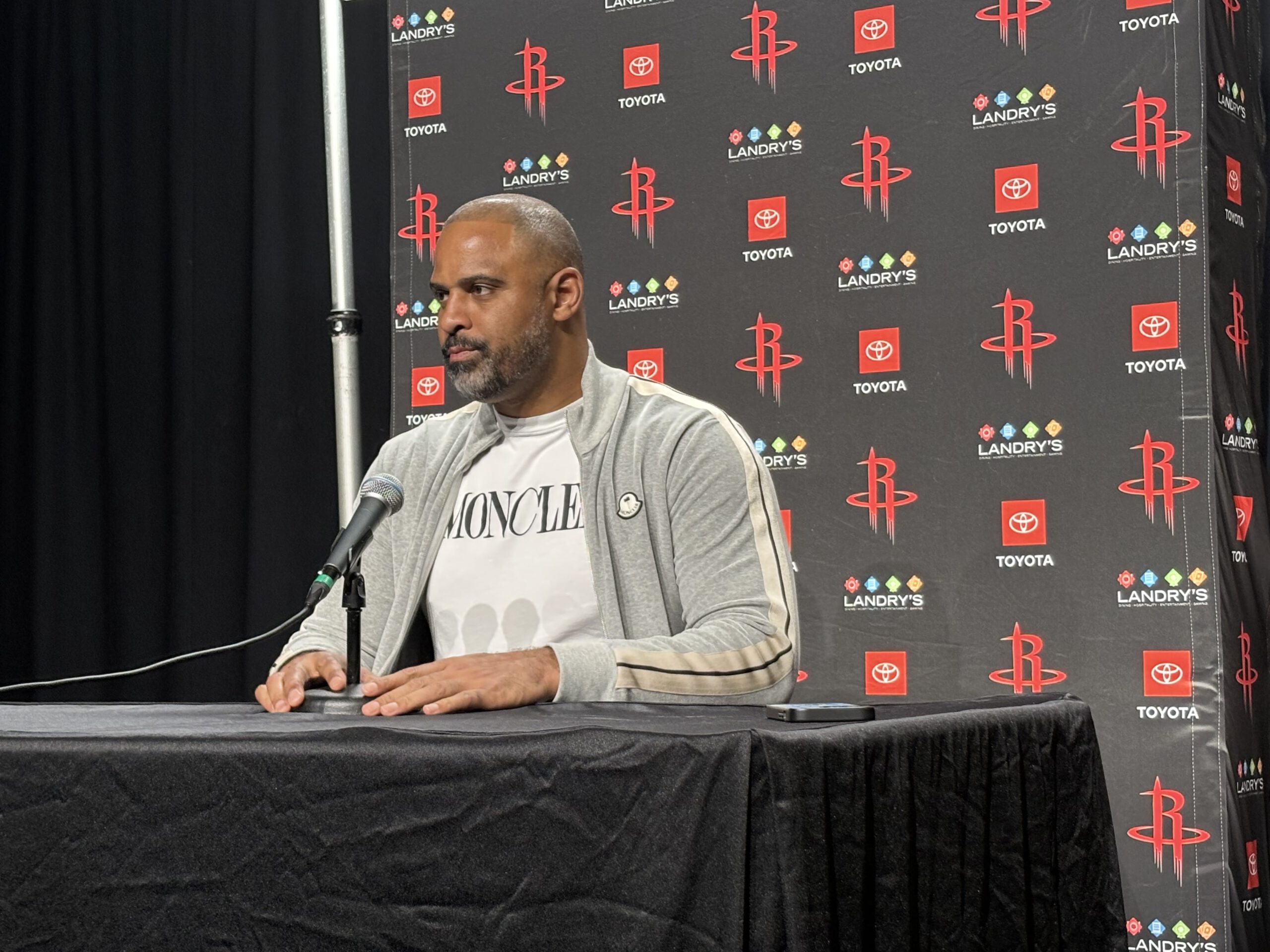
Ime Udoka didn’t raise his voice. He didn’t dress it up. He didn’t even pretend the question was new.
After Houston’s recent run of games in which opponents repeatedly dragged Alperen Şengün into pick-and-rolls and tried to turn him into the decision point on defense, Udoka was asked if the Rockets’ center had been getting “hunted” more over the last two outings. Udoka’s answer was as blunt as it gets:
“It’s been the case since I’ve been here. So no different there.”
Ime Udoka was FRYING Alperen Sengun postgame OMG
When asked about Sengun getting hunted on defense in pick and rolls in the last 2 games:
Ime: “It’s been the case SINCE I’VE BEEN HERE. So no different there.” 😳😭
— Hater Report (@HaterReport) February 6, 2026
On one level, it’s a straightforward coaching response. The question framed it as a recent trend; Udoka rejected the premise and widened the lens. If teams are targeting Şengün, Udoka’s point was that this isn’t some sudden scouting breakthrough from the last 48 hours, it’s been part of the regular season scouting report during his tenure, and Houston has been living in that reality for a while.
On another level, it’s the trade-deadline-week version of a coach telling the world, “Welcome to the job.” Because that’s what “hunted” really means in today’s NBA. It’s not personal. It’s a math problem. Opponents find the defender they believe they can stress, whether through footspeed, screen navigation, or the quick decisions required in space, and then they run the same test until the other team proves it can pass. If the Rockets want to be taken seriously, they don’t get to argue the question. They have to answer it possession after possession.
Udoka’s comment also lands with a little extra bite because Şengün is not some fringe role player you can quietly hide. He’s a centerpiece. The Rockets run offense through him, value his playmaking, and rely on his rebounding and interior presence. That’s exactly why the defensive targeting matters: the higher you are in your team’s ecosystem, the more the opponent tries to drag you into the harshest parts of theirs. A star big in 2026 doesn’t only post up and grab boards; he has to survive in space long enough to keep the entire scheme from bending.
There’s an honesty to Udoka’s bluntness that can read two ways, depending on which side of the camera you’re on. To fans, it sounds like a roast: a coach acknowledging that opponents have been circling the same area on the map for months. To the locker room, it can be a challenge disguised as a shrug. Udoka isn’t saying, “This is who we are, deal with it.” He’s saying, “This is what they’re trying, and it’s not going away just because you’re offended by the word.”
And in its own twisted way, that’s the most trade-deadline-coded quote imaginable. While the rest of the league spends the week treating players like moving parts, Udoka treated a very real basketball problem with the opposite energy: no drama, no novelty, no narrative. Just: this has been true; it’s still true; fix it.
For Houston, the next steps are familiar. You can tweak coverages, vary the level of the screen, send earlier help, scram switch, pre-rotate, and mix in zone looks to keep opponents from getting the same clean reads. You can also put better point-of-attack resistance in front of the action so the big isn’t constantly asked to solve a two-on-one with no margin for error. None of those solutions require pretending the problem started “the last two games.” They require accepting the premise Udoka laid down in one sentence: teams have been coming for that matchup since he arrived, and they’ll keep coming until Houston proves it can make them pay.
