
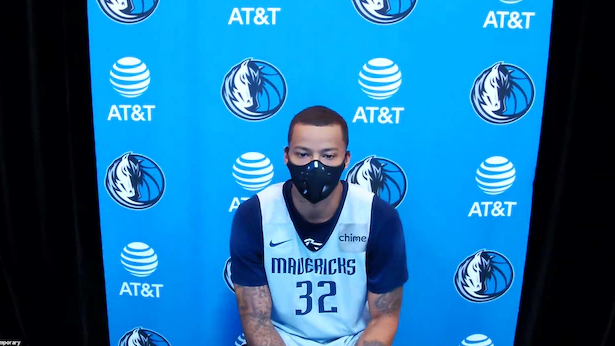
Years after his last meaningful NBA minutes, Trey Burke is publicly connecting the end of his run to a decision he made during the league’s COVID-era restrictions. In a recent interview clip circulating online, Burke said that once he chose not to take the vaccine in 2021, he felt the league, and specifically the Dallas Mavericks, began moving on without him.
“Mark Cuban, all of those guys—shout out to those guys,” Burke said, referencing the Mavericks’ leadership under owner Mark Cuban. “I just think it was a greater agenda in place. Once I decided not to get it, I kind of saw the end of the road for me in the NBA that next year. They didn’t play me that year; remember, we made it to the West Conference Finals,” Burke said.
“I knew my NBA run was coming to an end when I refused to get the vaccine. The Mavs just stopped playing me after that and I had a separate locker room away from the team. It was super tough, but I didn’t want to conform to that”
– Trey Burke on his NBA exit pic.twitter.com/eklUcKK4eh
— Ball Don’t Stop (@balldontstop) February 2, 2026
Burke’s comments revive a chapter that was already public at the time. In fall 2021, he confirmed he had not been vaccinated and described it as a personal decision he was still weighing, a stance that drew attention because of the league’s protocols and team-by-team realities. Around that same period, reporting in Dallas noted he was the only known unvaccinated Maverick and that the team’s handling of his availability quickly became a storyline.
The basketball record shows how quickly Burke’s role diminished. During the 2021–22 season, the year Dallas reached the Western Conference finals, Burke played 42 regular-season games at about 10.5 minutes per night, production that placed him firmly on the fringe of the rotation. His point isn’t that he was a star who got erased; it’s that he felt the decision accelerated the league’s willingness to view him as expendable, even on a team that was winning.
It’s also important to separate what Burke is claiming from what can be proven. The NBA’s health protocols in that era did create real restrictions and competitive complications for unvaccinated players, and Burke had acknowledged he would face “onerous” limitations. But Burke’s “greater agenda” framing is his interpretation, not an established fact, and the Mavericks have not publicly said his minutes were reduced for that reason. What is clear is that his NBA opportunities largely dried up soon after, and he now frames that period as the pivot point.
In telling it, Burke sounds less like someone litigating the past than someone trying to explain how fast the league can move when a player falls out of alignment with the moment. Whether you agree with his read or not, the quote hits because it captures the harshest truth of NBA life: sometimes a career doesn’t end with an injury or a dramatic decline, it ends with a decision, and then silence.
