
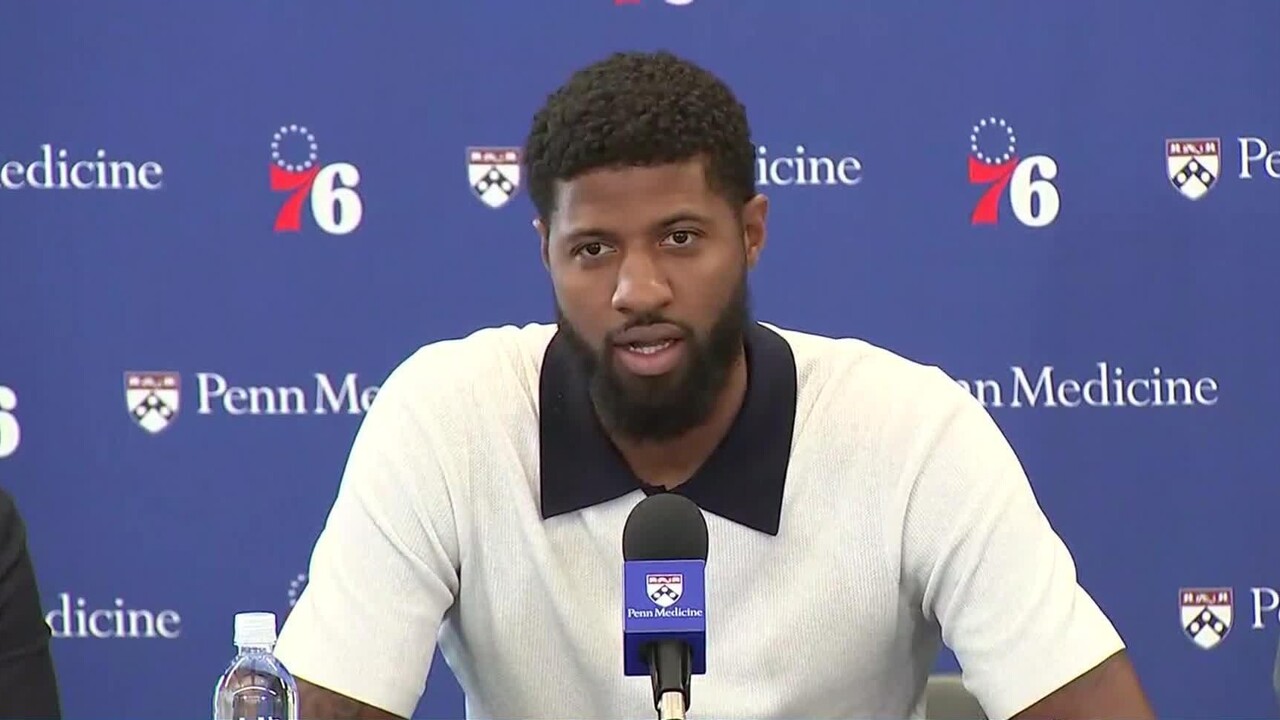
The NBA announced Saturday that Paul George has been suspended without pay for 25 games for violating the terms of the NBA/NBPA Anti-Drug Program, a major on-court blow to the Philadelphia 76ers at a moment when the Eastern Conference race is already tight and the trade deadline is looming. The league did not disclose the substance involved.
The following was released by the NBA: pic.twitter.com/hveY31Fzpg
— NBA Communications (@NBAPR) January 31, 2026
George addressed the suspension in a statement that leaned into accountability and context. He said that while seeking treatment related to a mental-health issue, he “made the mistake of taking an improper medication,” adding:
“I take full responsibility for my actions and apologize to the Sixers organization, my teammates and the Philly fans.”
He said he intends to use the suspension period to ensure his “mind and body are in the best condition” to help the team when he returns.
The suspension begins January 31, 2026, starting with Philadelphia’s game against the New Orleans Pelicans, and George is eligible to return March 25 (with 10 regular-season games remaining for the Sixers). For a team that signed George to be a high-end stabilizer alongside Tyrese Maxey and Joel Embiid, the absence is significant, even in a season where availability has been a recurring theme. George, 35, missed the first 12 games after knee surgery and has started 27 games, averaging 16.0 points, 5.1 rebounds, and 3.7 assists.
The financial ripple is just as real as the basketball one. Because the suspension is without pay, George’s 25 games will cost him $11,742,294 in salary, per salary-cap analyst Yossi Gozlan. Under the league’s tax accounting rules, Philadelphia will receive a luxury-tax credit worth half that amount ($5,871,147), a swing that Gozlan noted moves the Sixers from roughly $7 million above the luxury-tax line to about $1.3 million above it.
Paul George’s 25 game suspension will cost him $11,742,294.
The Philadelphia 76ers will receive a luxury tax credit worth half that amount ($5,871,147).
This brings the Sixers from $7 million above the luxury tax line to just $1.3 million above it.
— Yossi Gozlan (@YossiGozlan) January 31, 2026
All of it leaves Philadelphia staring at two clocks at once: the immediate one that ticks toward Feb. 5, and the longer one that measures the season in health, continuity, and margin for error. A 25-game hole is hard enough to survive on the court. The more complicated part is what it does to the team’s runway, competitive and financial, at the exact point of the calendar when franchises decide whether they’re buying, selling, or simply trying to stop the bleeding.
