
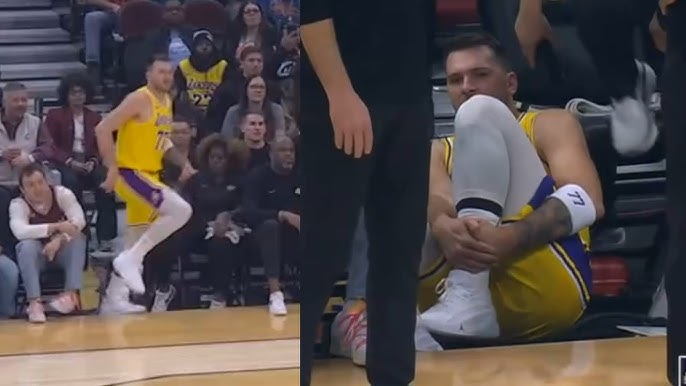
The Lakers left Rocket Arena with a blowout loss, but the bigger concern came from a detail that has nothing to do with shot-making or schemes: the floor itself. After Luka Dončić tweaked his left leg/ankle while stepping off the edge of Cleveland’s elevated court Wednesday night, Lakers coach JJ Redick didn’t hedge.
“It is absolutely a safety hazard,” Redick said afterward,
turning a long-simmering complaint into a full-volume league conversation.
Lakers G Luka Doncic avoided serious injury after falling off the side of the Cavaliers’ raised court at Rocket Arena.
The incident brought renewed attention to the venue’s 10-inch drop-off between the court and the arena floor.
Via @latimes | https://t.co/NZX8w3fZzO pic.twitter.com/wPp8AFBN00
— Sports Business Journal (@SBJ) January 29, 2026
Cleveland is unique in the NBA for playing on a raised playing surface, with roughly a 10-inch drop from the court to the surrounding arena floor in certain areas. The premise is that the drop sits far enough outside the field of play to stay irrelevant. Dončić’s fall, near the sideline and bench area, was the latest reminder that in real speed and real traffic, “out of play” can become “one step away.”
Why in the world are we playing on a raised court?!?! Luka just got injured.pic.twitter.com/JmewTiBp0c
— Legion Hoops (@LegionHoops) January 29, 2026
Yo Luka got a potty mouth.
“Who tf made this floor goddammit!” pic.twitter.com/EPgEV7aCyl
— Legreatness (@Legreatnessss) January 29, 2026
This isn’t theoretical, either. In November 2023, Heat guard Dru Smith suffered a significant knee injury in Cleveland when his leg slipped off the raised edge while contesting a shot, a play that prompted Miami to contact the league office with safety concerns at the time. That history is part of why this week’s incident resonated beyond the Lakers: it fit an existing pattern, not a freak accident.
A day after Dončić “narrowly avoided serious injury,” the NBA and the Cavaliers agreed to explore solutions, with discussions centered on potential modifications to the court setup. The urgency is obvious. Players spend every season learning opponents’ tendencies and arenas’ sightlines; they shouldn’t have to learn the geometry of a drop-off the hard way.
The Cavaliers can argue the design has functioned for years. The Lakers, and plenty of players before them, can argue the same thing in reverse: it only takes one awkward landing for “years” to stop mattering. After Dončić’s scare, Redick’s stance was simple, if the league is serious about minimizing preventable injury risk, the floor can’t be the variable that keeps coming up.
