
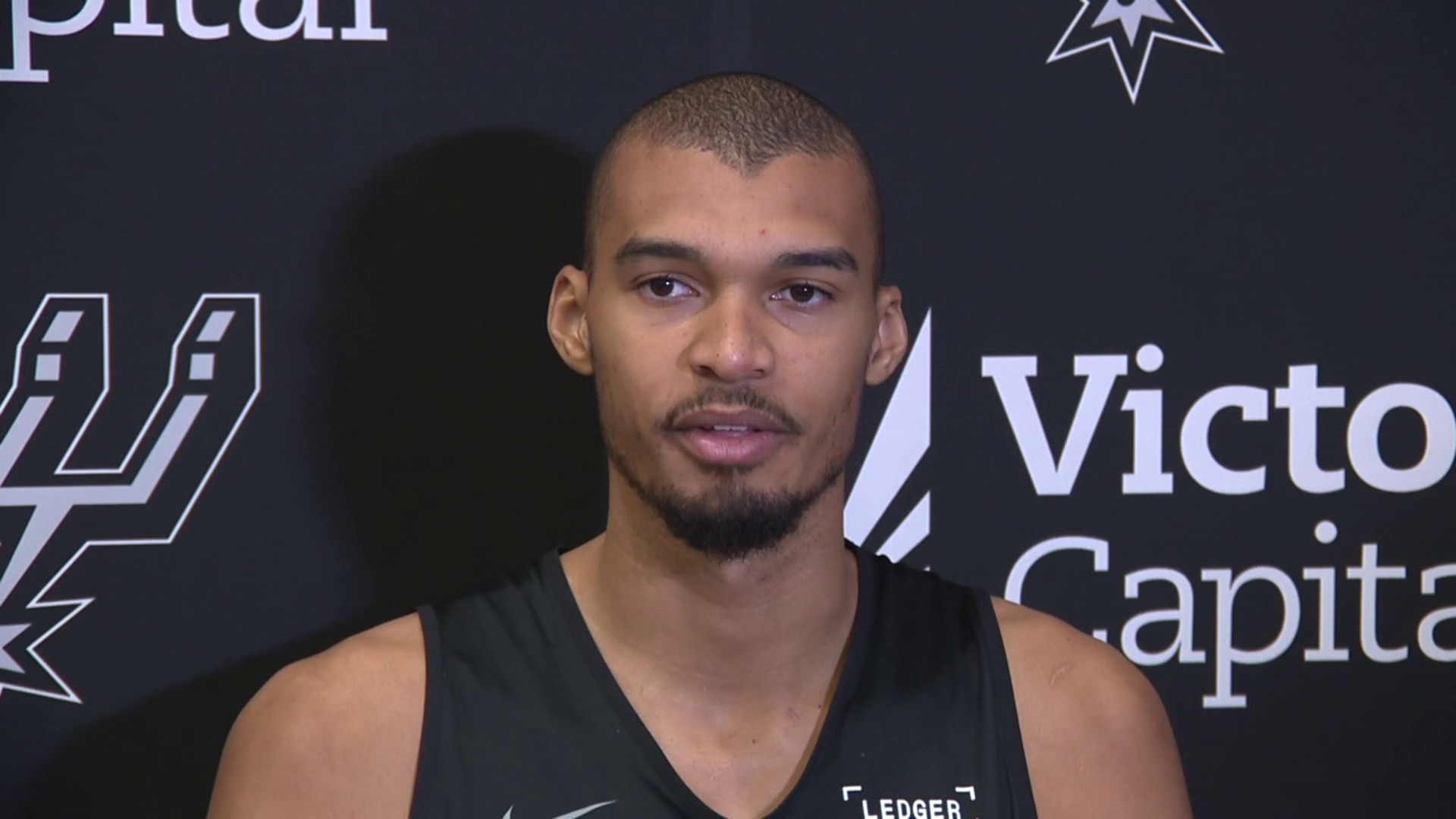
Victor Wembanyama was asked about Minneapolis, and the first thing he did was reject the choreography.
“PR has tried, but I’m not going to sit here and give some politically correct [answer],”
the San Antonio Spurs star told reporters after practice this week. Then he said what he actually meant:
“Every day I wake up and see the news, and I’m horrified.”
The question came in the wake of two fatal shootings in Minneapolis involving federal agents, deaths that have sparked protests, grief, and a fast-moving national argument about power, enforcement, and accountability. Alex Pretti, a 37-year-old ICU nurse, and Renee Good, a 37-year-old mother of three, were killed in separate incidents tied to a broader immigration enforcement operation in the city.
Wembanyama’s point wasn’t to litigate every detail from afar. It was to refuse the moral numbness he believes can seep into public life.
“I think it’s crazy that some people might make it seem like or make it sound like the murder of civilians is acceptable,” he said.
Victor Wembanyama weighs in on Minneapolis. pic.twitter.com/AgCuvlcc7M
— Don Harris (@DonHarris4) January 27, 2026
In a league where athletes are routinely urged to keep answers “safe,” Wembanyama did something increasingly rare: he spoke in plain language about what he sees as a basic human line. He also acknowledged the risk of doing so. Wembanyama said he is not a U.S. citizen and admitted he has “concerns for sure” about repercussions.
That tension – moral clarity on one side, personal consequence on the other – surfaced again when he referenced comments from fellow French NBA player Guerschon Yabusele, who had posted that he could not remain silent about Minnesota. Wembanyama praised that impulse, but he also offered a sobering addendum about what truth-telling can cost. Yabusele’s words, Wembanyama cautioned, “might have some price right now,” before adding: “Each and every one of us has to decide a price we’re willing to pay.”
It’s a striking sentence coming from a 22-year-old who is still early in his NBA life, not just because it’s eloquent, but because it’s realistic. Wembanyama didn’t posture as fearless. He described a boundary he’s actively negotiating.
“I’m conscious also that saying everything that’s on my mind would have a cost that’s too great for me right now,” he said, explaining why he would not “get into too many details.”
Around the league, Minneapolis has become more than a headline. The National Basketball Players Association issued a statement saying players “can no longer remain silent,” emphasizing solidarity with people protesting in Minnesota and the need to defend freedom of speech. In the background sits the reality that sports do not float above civic life; they operate inside it. Even the schedule felt the tremor, when the NBA postponed the Warriors–Timberwolves game for safety reasons amid the unrest.
Wembanyama, though, isn’t trying to be an activist mascot, and his comments didn’t read like branding. They read like the thoughts of someone who processes the world out loud; cautiously, sometimes, but without surrendering his center. That’s part of why he has begun to register as something more than the league’s most fascinating physical outlier. Even at an age when most stars are still learning which questions to dodge, he has shown a willingness to engage with the ones that matter, and to do it with a kind of reflective restraint that tends to earn respect rather than backlash.
This is not the first time he has stepped into uncomfortable public terrain. In 2024, he urged voters in France to “take a distance from extremes” ahead of national elections, aligning himself with other high-profile French athletes speaking about politics despite the traditional pressure on sports figures to stay neutral.
Taken together, moments like these explain why Wembanyama is increasingly viewed, by many fans, as a voice of reasoning in a league that can feel perpetually trapped between sincerity and strategy. He doesn’t pretend he can solve Minneapolis from a practice facility in Texas. What he refuses to do is pretend it’s normal.
And maybe that’s the larger point. The NBA has always been a theater for more than basketball: it’s a global entertainment machine populated by globally recognizable people, some of whom decide their platform comes with obligations. Wembanyama is not claiming moral superiority; he’s acknowledging moral cost. But in choosing to speak anywa, in choosing not to “sit here and be politically correct,” as he put it, he’s telling you what he believes the job is sometimes: to be honest enough to risk inconvenience, and careful enough to understand the stakes.
