
Victor Wembanyama didn’t treat his first All-Star starting selection like a finish line. He treated it like a doorway.
When the NBA unveiled its 2026 All-Star “starters”, Wembanyama was the last name announced, a made-for-TV pause before the reveal. A few hours later, he was on the floor in San Antonio, turning the honor into fuel.
“It’s good because it made my adrenaline spike before the game,” he joked afterward.
But the part that stuck with him wasn’t the theatrics of the announcement or even the word “starter” itself, an increasingly loose label in a year when the All-Star Game is being rebuilt into something closer to a mini-tournament than a traditional exhibition. The NBA’s new structure will feature two U.S. teams and one “Team World” in a round-robin of four 12-minute games, with the top two advancing to a 12-minute championship.
What hit Wembanyama, instead, was the passport.
“I was really happy to learn I was the first French guy to get that,” he said,
framing the moment as national pride more than personal validation. The league has had French All-Stars before, Tony Parker headlined a generation; Rudy Gobert became a perennial postseason defender with All-Star recognition, but being voted into the starting group is a different kind of visibility. It’s the kind that turns a player into a symbol, whether he asks for it or not.
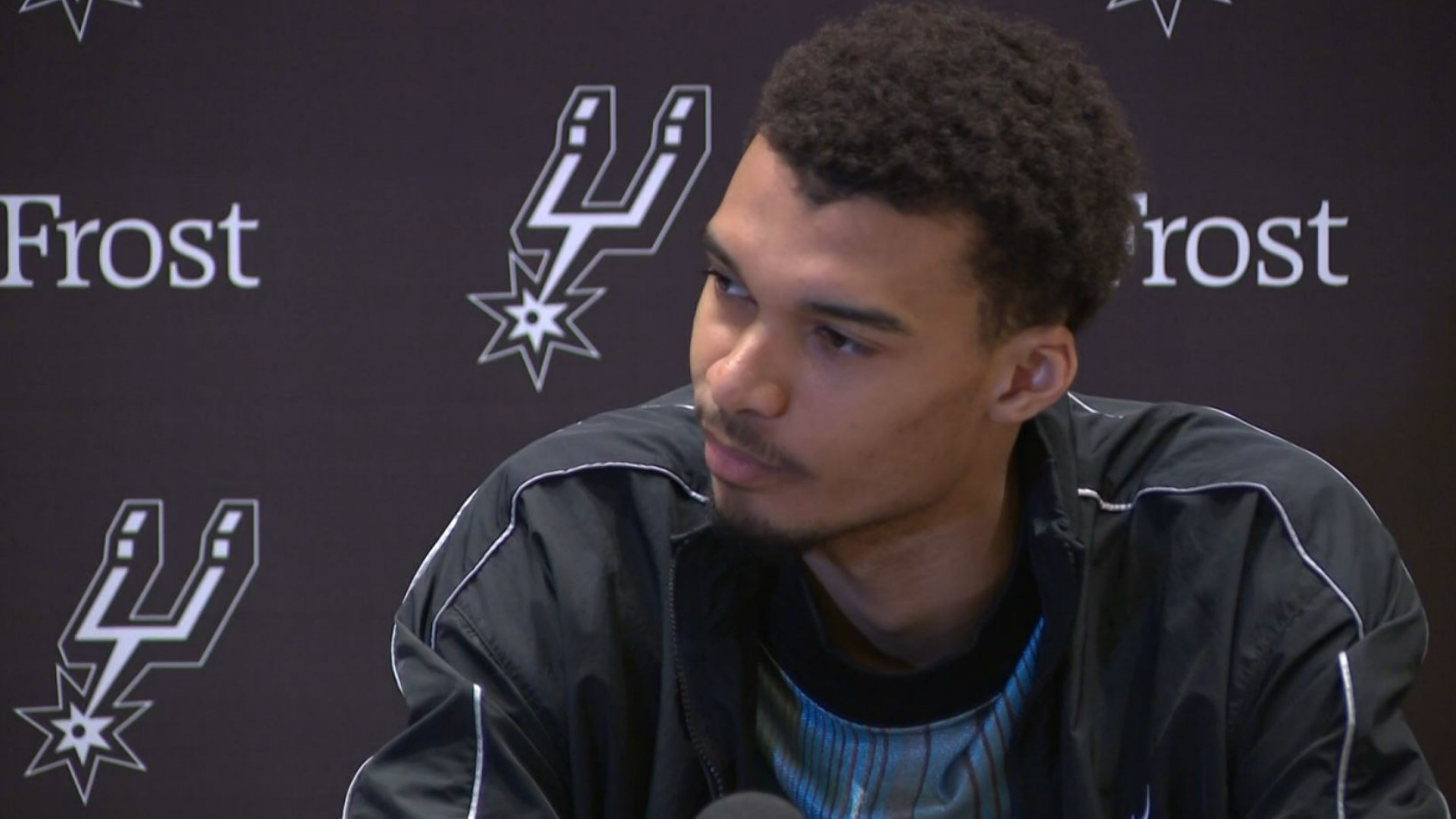
In his post-game press conference after last night’s game, Wembanyama leaned into that symbolism the way only he can: without sentimentality, but with an eye on what comes next. He called it “a real pride,” and then immediately widened the lens toward the pipeline, France’s recent No. 1 picks and the idea that the next one might already be warming up somewhere.
That same presser offered a glimpse of what might become the most entertaining subplot of this new format: the World team won’t just be a marketing concept; it will be a personality test. Asked whether Team World should be favored, Wembanyama didn’t talk like someone hoping for a friendly run. He talked like someone trying to change the temperature of the entire weekend. He said he wants to play hard, really hard, and more than that, he wants to drag the rest of the stars into that intensity with him, even if it gets uncomfortable.
That edge isn’t new. Last season, in the league’s then-new mini-game format, Wembanyama was one of the few stars publicly pushing the idea that an All-Star appearance should still be competition, not content. The league’s pivot to USA vs. World is an attempt to bottle exactly that, national pride as an accelerant, urgency as a feature, not a plea.
And it’s why his comments land differently than the usual midseason slogans. Wembanyama isn’t merely saying he’ll take it seriously. He’s saying seriousness is contagious, if the biggest, brightest names see someone treating the night like it matters, they’ll either match it or get left behind.
The irony is that this is precisely what the NBA is trying to solve. For years, the All-Star Game has lived in a weird space: too prestigious to ignore, too unserious to remember. The new format is the league acknowledging that the spectacle needs stakes, even if they’re artificial. And Wembanyama, almost by accident, has become the perfect lead actor for the experiment: global identity, generational profile, and a default competitive setting that doesn’t soften just because the calendar says February.
