
The first thing you learned on NBA Berlin Game night is that history doesn’t always announce itself with fireworks. Sometimes it shows up on a metro sign.
On January 15, 2026, the NBA staged its first regular-season game in Berlin, with the Orlando Magic defeating the Memphis Grizzlies 118–111 at Uber Arena. Orlando erased a 20-point deficit, fueled by a dominant third quarter and late execution, with Paolo Banchero (26 points, 13 rebounds) headlining the box score and Franz Wagner returning from injury to post 18 points and nine rebounds in a city that raised him.
But outside the arena’s lights and the NBA’s polished staging, Berlin delivered the most Berlin tribute possible: public transportation. In a short-lived rebrand timed to the event, the BVG temporarily renamed Richard-Wagner-Platz to “Moritz-und-Franz-Wagner-Platz”, a gesture that, to non-Berliners, might read like a cute marketing stunt, and to actual Berliners reads like civic canon.
Für NBA-Spiel: BVG benennt U-Bahnhof nach Wagner-Brüdern : https://t.co/5sLUUuhTuD | #Berlin #ÖPNV #BVG #VBB #SBahn #UBahn
— MyTransit Berlin (@MyTransitBerlin) January 15, 2026
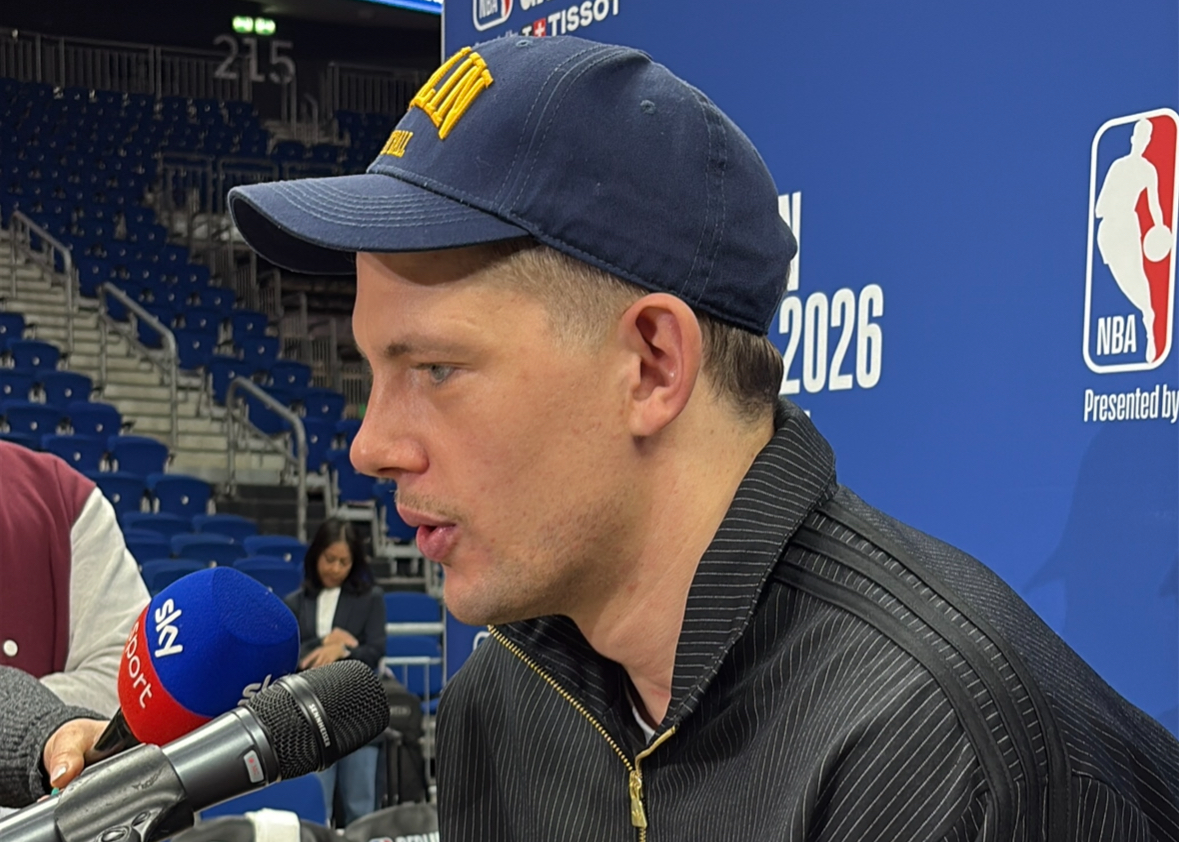
After the game, I asked Moritz what it did to him to see it; his name, their names, on a station in his home city. His answer wasn’t the typical athlete script about being “honored” and “grateful.” It was more specific than that, more local, and therefore more honest.
He told me that many people don’t really understand what the BVG means to Berlin, the prestige, the symbolism, how it functions like a public signature of the city itself. And that’s why, he said, it made him feel “mulmig,” that mixture of pride and unease that happens when something familiar suddenly reflects you back at a larger scale. He was candid about the absurdity of it too: we’re talking about a public transport system, he said, almost laughing at the thought, yet insisting it mattered precisely because it’s emblematic of Berlin’s identity, of what makes Berlin feel cool, particular, unmistakably itself.
Then he landed the point that turned a novelty into something heavier: it felt like reciprocity.
Wagner explained that he and Franz come home often, that they try to give the city something back from their lives and careers, and that seeing Berlin give something back, publicly, playfully, in the language of its own streets, hit him in a way he didn’t quite have words for. It was, he said, “a very, very great experience.”
Arbeitsnachweis NBA Berlin (Danke für die Videos @JedenTagNBA) pic.twitter.com/MkJPM1mAUX
— Len Werle (@RealLennyCarlos) January 16, 2026
The BVG’s own public messaging matched that tone: welcoming the “Wagner Brothers” home, making it temporary by design, like a pop-up monument that exists just long enough to be felt before it disappears again into everyday life.
That’s what made this Berlin game different from the NBA’s usual international traveling circus. The league can export logos and a court and a halftime show anywhere. What it can’t manufacture is local meaning, those small civic details that make an event feel stitched into the city instead of dropped onto it. Berlin provided that part on its own.
