
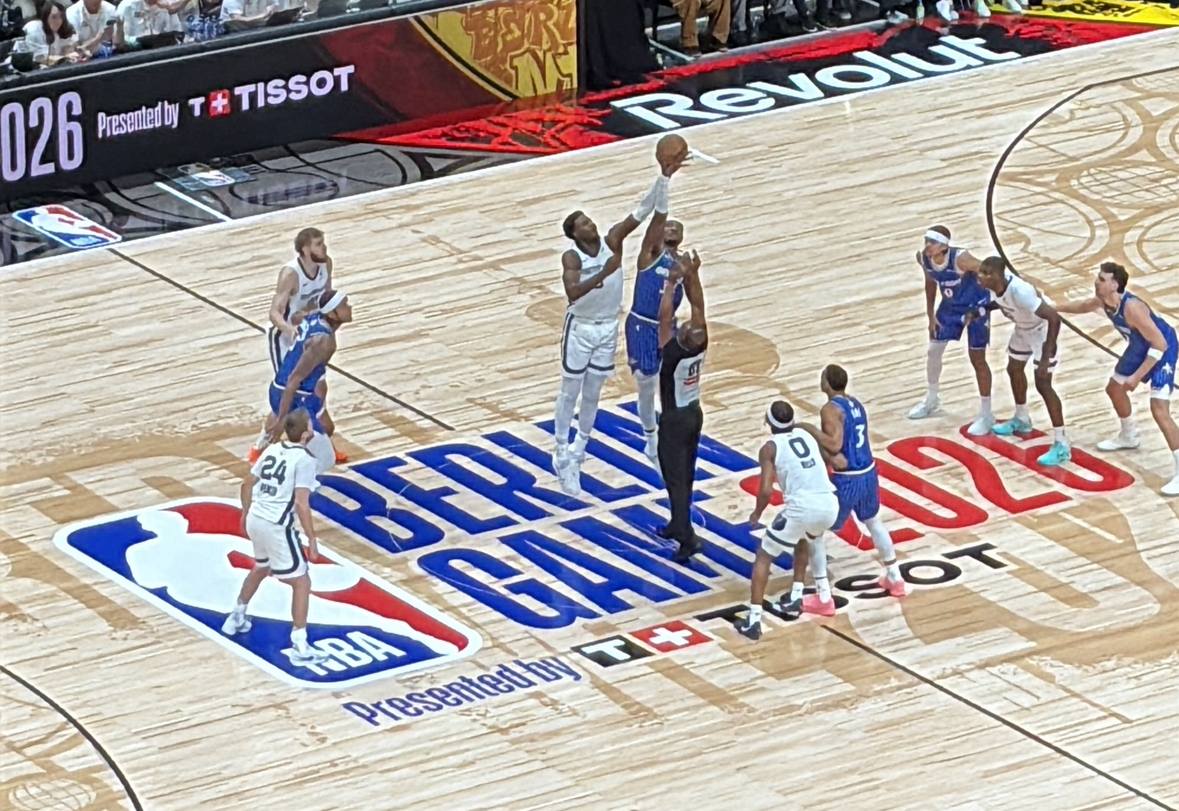
Berlin has hosted every kind of big night a modern capital can stage, politics, pop culture, prizefights, techno marathons that blur into morning, but on Thursday, it hosted something the NBA had never before dared to make official: a regular-season game on German soil. The Orlando Magic and Memphis Grizzlies walked into the Uber Arena, and by the time the final horn sounded, the city had its first NBA result that actually counts in the standings.
It was a showcase night built around a homecoming. Orlando arrived with a German spine, Franz Wagner and Moritz “Moe” Wagner, both Berlin products, plus Tristan da Silva from Munich, and the building felt like it was waiting for those names the way a theater waits for its lead actors. Even the city leaned in. Berlin’s transit authority, the BVG, temporarily rebranded the Richard-Wagner-Platz station as “Franz-Wagner und Moritz-Wagner-Platz,” a wink so local and so specific it could only happen here.
Then the game started, and for a while it looked like the night would belong to Memphis. The Grizzlies sprinted into an early lead that swelled as high as 20 points. But this Berlin ended as a comeback.
Orlando won 118–111, and the shape of the turnaround was as important as the final score. The Magic’s third quarter turned the game on its hinge: Orlando outscored Memphis 26–12 in the period, possibly the Magic’s best defensive quarter of the season, and the lead Memphis had built with comfort suddenly looked fragile.
At the center of Orlando’s response was Paolo Banchero, who finished with 26 points and 13 rebounds. Anthony Black added 21 points, including four threes, providing the ignition a comeback needs when the crowd is loud and the legs are heavy from travel. And then there was Franz Wagner, the emotional axis of the night, returning from a 16-game absence with an ankle injury and dropping 18 points and nine rebounds as if the calendar had simply skipped ahead to the good part.
The endgame belonged to him, too. In the final minutes, Wagner authored the close with the kind of composed touches that look simple only because they’re performed under pressure: late scores, late free throws, the small decisions that separate a fun international event from a real NBA win.
Memphis, meanwhile, had a different kind of headline: the absence of its brightest light. Without Morant, Memphis leaned on Jaren Jackson Jr., who scored 30 points, and got support from Santi Aldama (18) and Cedric Coward (17), enough firepower to build a big lead, not enough to hold it once Orlando tightened the screws.
The result mattered for more than a box score. This was an NBA night staged as a statement about Germany’s place in the league’s future. Ticket demand told the story before the opening tip: hundreds of thousands of registrations across the Berlin and London games, and fans traveling from dozens of countries for the event. The league didn’t just drop in for a game; it built a week around it. Berlin’s NBA House activation opened at the Uber Eats Music Hall with interactive events and appearances from former players, turning the city into a temporary NBA neighborhood rather than a one-night stop.
Hovering over it all was the symbolism of German basketball’s timeline. Dirk Nowitzki, now a broadcaster for the game, spoke about the strange mix of joy and stress that comes with “home” games abroad, how meaningful it is, and how exhausting it can be with obligations and the gravity of family and friends in the stands. Berlin didn’t just celebrate the Wagner brothers; it celebrated the idea that the Nowitzki era wasn’t a one-off, that Germany is producing enough top-tier talent to make a regular-season NBA night feel inevitable rather than exotic.
When it ended, it ended the way the NBA would want a first night to end: with a competitive game, a comeback, star performances, and a final score that will live in the official record. Orlando left Berlin with a win and a German heartbeat that made the arena feel like a home court. Memphis left with questions, about health, about chemistry, about trade rumors, about consistency, about how a team protects a lead when the other side finds the defensive gear.
And Berlin left with something rarer than souvenirs: proof. Proof that the league can drop a meaningful game into the middle of Europe and still have it feel like the NBA, not an exhibition in NBA clothing. Proof that the sound in the building can swell for a free throw as much as a dunk when the player at the line is one of your own. Proof that a city can watch a “historic first” and still demand a real basketball story on top of it.
It got both.
