
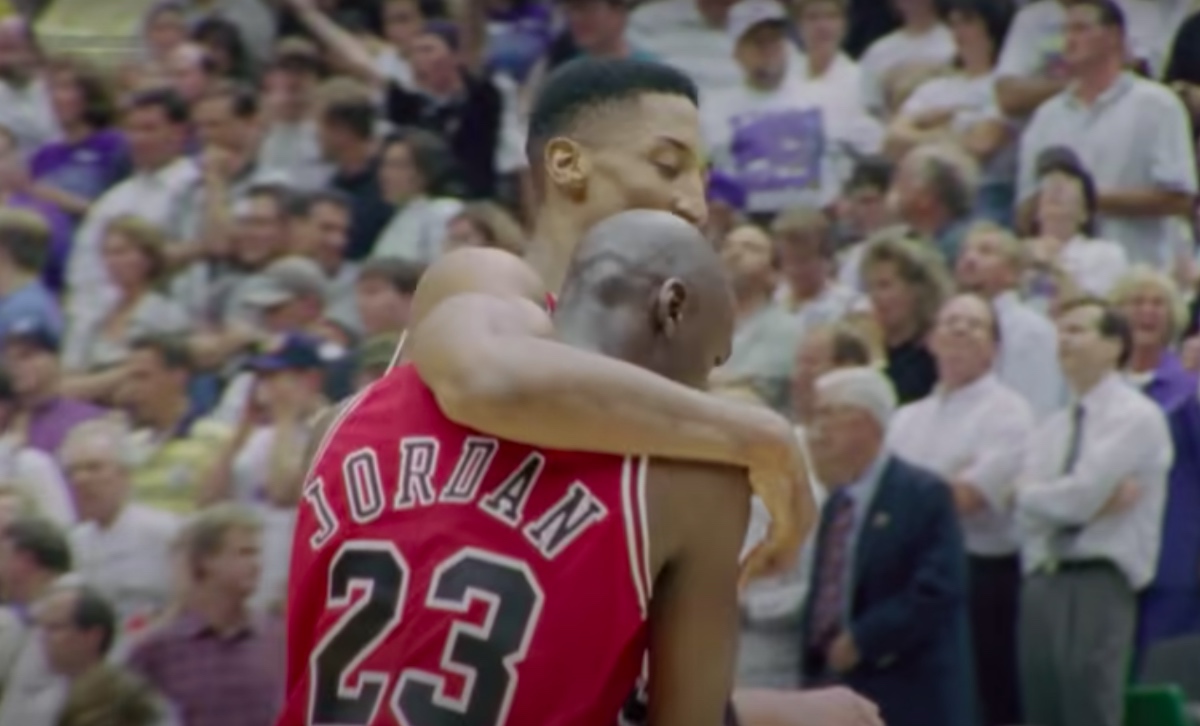
On Jan. 8, 1997, as the league celebrated its 50th season, the NBA unveiled a list designed to settle bar arguments and spark new ones at the same time: the Top Ten Teams in NBA History. The selections, presented without ranking, were a time capsule of dominance, dynasties, and stylistic eras, stitched together by one common thread: every team on the list finished the job and won the championship.
The ten honored teams were the 1964–65 Boston Celtics, 1966–67 Philadelphia 76ers, 1969–70 New York Knicks, 1971–72 Los Angeles Lakers, 1982–83 Philadelphia 76ers, 1985–86 Boston Celtics, 1986–87 Los Angeles Lakers, 1988–89 Detroit Pistons, 1991–92 Chicago Bulls, and 1995–96 Chicago Bulls.
The league’s own framing made clear this wasn’t meant to be a sentimental roll call. The NBA noted that the ten teams selected averaged 66 wins, an .805 winning percentage, and that the distribution across decades was deliberate: three from the 1960s, one from the 1970s, four from the 1980s, and two from the 1990s.
That mix, even now, reads like the official story of how the league understood excellence at the time: the Russell-era Celtics as the sport’s foundation, the early-’70s Lakers and Knicks as the bridge to modern celebrity basketball, the ’80s as the league’s television boom, and the ’90s Bulls as the global apex.
It also reflected the reality of who had the loudest historical footprint by 1997. Just six franchises were represented, with Boston, Chicago, Los Angeles, and Philadelphia claiming two teams each, a concentration that underscored how championships, and the mythology around them, tend to cluster around a few organizations.
The process mattered, too. Contemporary reporting described the list as part of the NBA’s 50th-year celebration, compiled from unranked selections by a media panel that covered the league regularly.
That “unranked” detail is crucial, because it explains why the list has endured without ever truly closing the argument. The NBA wasn’t crowning a single greatest team; it was naming a top shelf, then letting fans fight over the order forever.
The teams themselves tell you what the voters valued. The selections reward not only winning, but a particular kind of winning, teams that felt definitive. The 1971–72 Lakers, for example, were chosen as the emblem of regular-season dominance from that era, while the 1988–89 Pistons captured the identity of a champion built on force, depth, and defensive edge. The 1995–96 Bulls were the modern exclamation point, selected at a moment when their 72-win season was still fresh enough to feel like a new boundary for what an NBA team could be.
Yet the most interesting part of revisiting the list in 2026 isn’t whether it was “right.” It’s how clearly it reveals the league’s historical frame at the time it was made.
In 1997, the NBA was looking backward from a particular vantage point. The three-point revolution had not yet rewritten roster construction. Expansion had reshaped talent distribution. International stardom existed, but it wasn’t the league’s center of gravity the way it would become. In that context, the honored teams weren’t just champions, they were reference points for entire eras: Russell’s Celtics as the standard-bearers of institutional greatness; Wilt’s Sixers and the early-’70s Lakers as proof that one transcendent force could tilt the sport; the Bird Celtics and Magic Lakers as the defining rivalry of the league’s modern ascent; the Bad Boys Pistons as the hard reset; and the Jordan Bulls as the ultimate finishing school for the league’s global brand.
The list has also aged into a kind of annual thought experiment. Because it was locked in at the 50th anniversary, it necessarily excludes teams that would later become central to any serious “best ever” discussion, dominant champions from the Spurs’ peak, the Shaq-and-Kobe Lakers, the 2010s Warriors, and other modern powerhouses. That limitation isn’t a flaw so much as a reminder: greatness debates are always shaped by the time they’re written in.
Which is why the Jan. 8, 1997 announcement still matters. Not because it ended anything, but because it established an official baseline, ten championship teams the league itself was willing to elevate as historical monuments. Every new superteam, every record pace, every juggernaut defense since then gets measured, explicitly or implicitly, against that shelf.
