
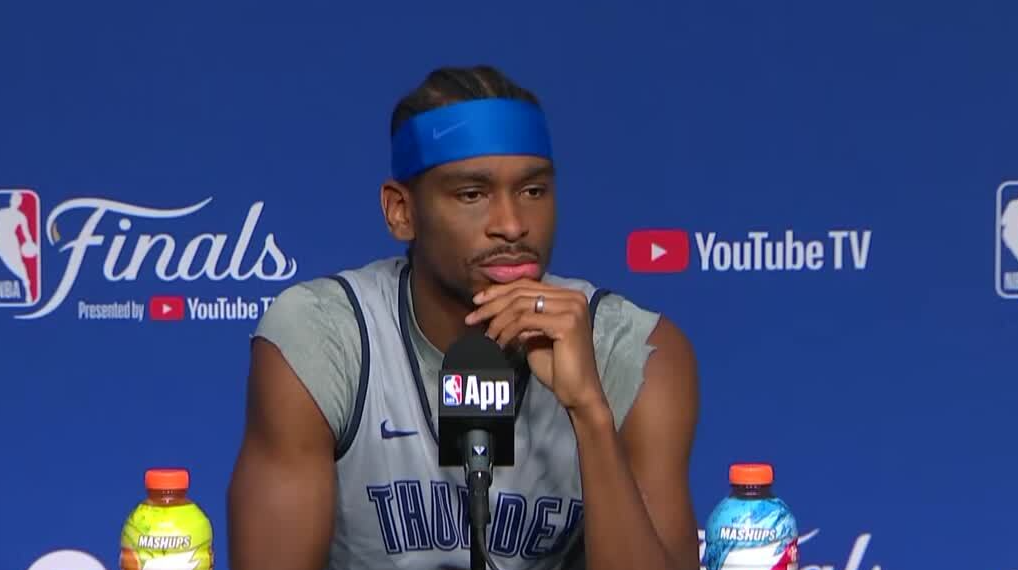
When you start a season like Oklahoma City did, every stumble becomes a headline. Not because the Thunder are fragile, but because dominance changes the volume of the conversation. Shai Gilgeous-Alexander knows that better than anyone, and this week he met the noise with a reminder that felt equal parts perspective and warning label.
“[The media conversation is] going to be very loud because we barely lost,” Gilgeous-Alexander told Andscape. “But I’ve had way tougher times as an NBA player. So, I’m not overreacting or anything. But we definitely need to get better… We didn’t think we were going to go 81-1 and not lose to anybody, [or] we were going to win the championship with the team we had [last season].”
The quote landed because it cuts against the modern reflex to treat every two-week stretch like a referendum. The Thunder opened the year 24–1, a pace so blistering it naturally invited reckless math, historic comparisons, record-watch chatter, talk of whether this group could even flirt with the old 73–9 benchmark.
But the schedule doesn’t care about your first 25 games, and neither does the league once it has a season’s worth of film on you.
December delivered Oklahoma City that reminder in a hurry. The Thunder dropped four of five during one stretch, including three losses to the San Antonio Spurs, and entered Tuesday with an NBA-best 30–7 record while playing .500 basketball over their last 10.
That’s not collapse. That’s the normal violence of an NBA season catching up to a team that spent the first two months making “normal” feel optional.
What makes Gilgeous-Alexander’s message resonate is that it’s not denial. He doesn’t pretend the losses are meaningless. He doesn’t swat away critique with “it’s a long season” as if time alone fixes things. He concedes the obvious: Oklahoma City has to improve, then reframes the idea that improvement is a crisis.
In his telling, this is what development looks like when you’re developing while already sitting near the top of the standings. The Thunder are young, talented, and now heavily scouted. Opponents aren’t surprised anymore. Schemes adjust. Matchups get targeted. And the league’s best teams test you in ways that don’t always show in the final score.
The Spurs, in particular, have functioned like a measuring stick with teeth. Oklahoma City’s second loss of the season came in the NBA Cup semifinal, a 111–109 Spurs win in Las Vegas.
San Antonio followed it by beating the Thunder again in late December, and by Christmas the storyline had hardened into something sharper: the Spurs had beaten the defending champs three times in roughly two weeks.
Even in the loss that didn’t feel “barely”, a 130–110 defeat on Dec. 25, the point wasn’t that Oklahoma City had been exposed forever. It was that a contender found a way to make them uncomfortable repeatedly, which is the entire purpose of regular-season chess between teams that expect to see each other when it matters.
And that’s why the “we barely lost” line is doing more work than it seems. It’s Gilgeous-Alexander acknowledging how thin the margins are at the top, and how quickly a close loss becomes a loud story when you’ve trained everyone to expect blowouts.
That dynamic was amplified again this week when the Thunder were flattened at home by Charlotte, 124–97, their worst loss of the season, a night where they failed to crack 101 points for the first time and watched the Hornets torch them from three.
If you’re looking for a fork in the road, panic or progress, those are the games that usually force the choice. Gilgeous-Alexander’s approach is to treat them as evidence, not embarrassment: proof that the league is adjusting, and that Oklahoma City has to adjust back.
