
There are NBA wins that live on highlights. And then there are the ones that live in the margins, inside locker rooms, inside film sessions, inside the private confidence a team builds when the world tells it the math doesn’t work.
Denver’s 125–124 overtime stunner in Philadelphia on Monday night was the second kind, and it produced an unlikely narrator: Nuggets forward Spencer Jones, who took to LinkedIn afterward to describe a game that “on paper… didn’t make sense,” a night when “effort carries” and “belief compounds.”
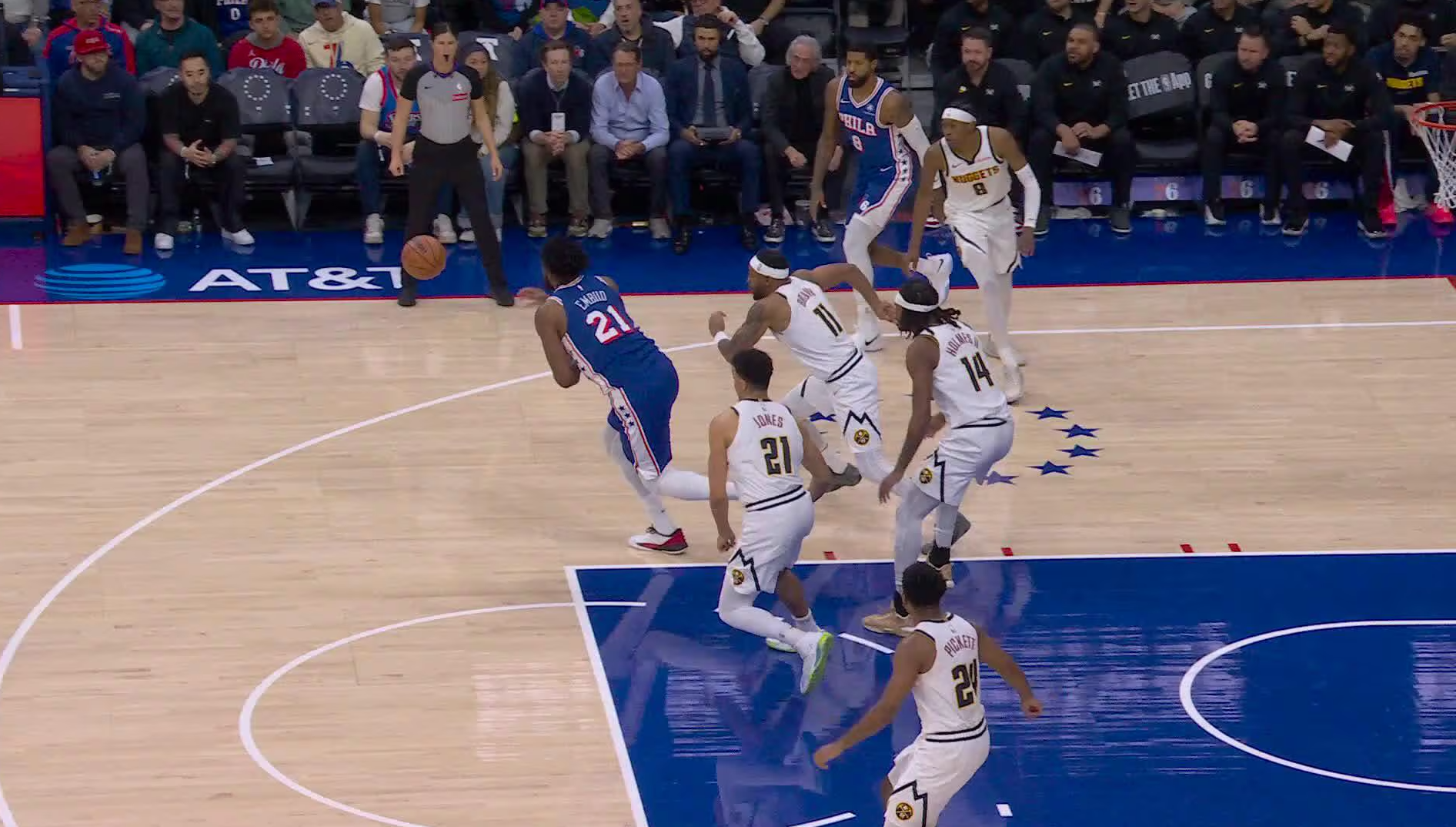
The premise really was absurd. The Nuggets arrived at Xfinity Mobile Arena missing seven of their top eight scorers, including Nikola Jokić and all five regular starters, and played the kind of rotation you associate with a preseason back-to-back: young pieces, deep bench minutes, and the constant question of who can survive the next possession.
Yet the box score reads like a rebuttal to common sense. Jalen Pickett authored the headliner, 29 points on seven threes, plus seven assists in nearly 42 minutes. Peyton Watson poured in 24. Zeke Nnaji gave Denver 21 and eight rebounds, stretching the floor with four made threes. And Jones, the LinkedIn protagonist, logged 43:27 and chipped in 10 points.
Philadelphia didn’t treat it like a gimmick, either. Joel Embiid played 40 minutes, finishing with 32 points and 10 rebounds, and Tyrese Maxey had 28 in a game the Sixers led late and absolutely expected to close.
But the Nuggets refused to cooperate with the script. Down 100–92 in the fourth, they detonated a 14–0 run that flipped the building from inevitability to unease, one of those momentum swings that starts with a stop, then a second stop, then the dawning realization that the underdog is no longer playing with house money.
The endgame was as chaotic as the setup. Regulation ended tied 120–120, and overtime tilted on a moment that felt like a whistle-written plot twist: Bruce Brown’s driving attempt with 5.3 seconds left was ruled goaltending on Embiid, turning a miss into the deciding points in a one-point game. Brown finished with 19, but the margin was the call, the timing, the tiny slice of space between “survive” and “steal.”
Jones’ post resonated because it didn’t try to outsmart the night. It framed the win the way players experience these game; not as an abstract lesson in analytics or a referendum on a contender’s ceiling, but as a pure test of collective buy-in. He wrote about being “shorthanded by seven players” with “no starters available,” and about a defensive matchup that felt comically mismatched against a “near 300-pound center.”
And that’s why the game traveled so well online. LinkedIn isn’t where NBA players traditionally process wins, but Jones has made a small lane out of being a professional athlete with a professional-network voice, and this one landed because it read like the cleanest summary of a bench mob’s dream: the night your name gets called, the night the scouting report gets simplified to “compete,” the night you find out that the league doesn’t care where you started as long as you can survive where you’ve arrived.
Denver’s win won’t change what the Nuggets are at full strength. It also won’t erase how hard it is to play a top opponent on the road without your usual structure. But it will live as proof of something teams preach and rarely get to demonstrate this loudly: if you can keep the game close long enough, pressure starts to migrate. It doesn’t disappear. It just changes jerseys.
