
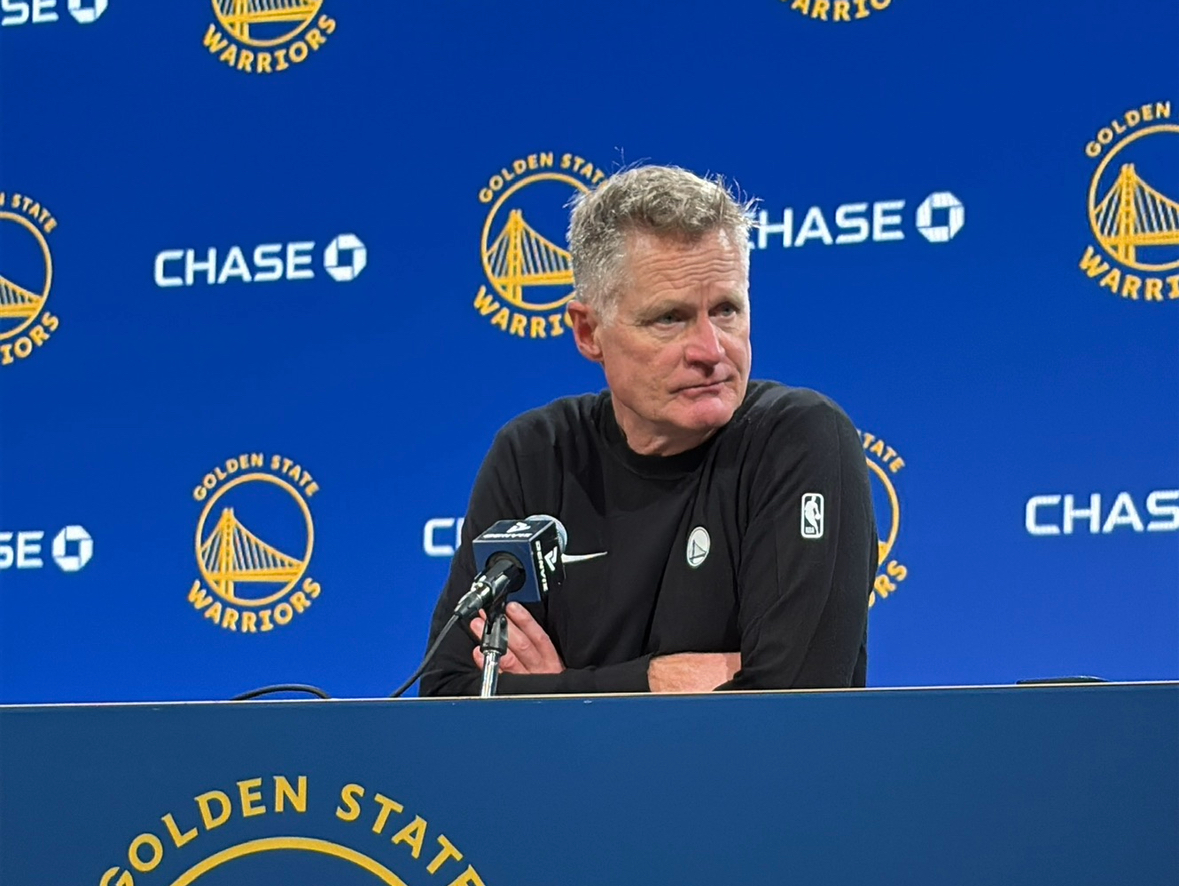
Steve Kerr is usually careful with the way he frames the Warriors’ present. He’ll defend the competitiveness, remind everyone what the culture still is, and point toward the next opportunity. This time, he chose something rarer in NBA messaging: a dose of realism, delivered plainly enough that it sounded like a preemptive strike against false expectations.
“We know we’re not where we were 5/6 years ago,” Kerr said, acknowledging that Golden State isn’t operating from the same talent-and-prime advantage that defined the dynasty peak. “I don’t want anybody to think that we’re delusional and thinking we should be competing for titles year in and year out with San Antonio and OKC.”
Steve Kerr says it’s not realistic to expect the Warriors to compete with OKC and Spurs over the next few years
“We know we’re not where we were 5/6 years ago…. I just don’t want anybody to think that we’re all delusional and thinking we should be competing for titles year in… pic.twitter.com/R1ohdaK8rK
— NBA Courtside (@NBA__Courtside) January 2, 2026
Kerr’s comments came in the wake of a lopsided loss to the Thunder at Chase Center, the kind of night that makes the gap between eras feel visible. Oklahoma City, one of the league’s elite teams, controlled the game from the jump and ran away with it, while Golden State was shorthanded and searching for answers.
The point Kerr is making isn’t that the Warriors are surrendering their standards. It’s that the league has shifted into a new cycle, and two franchises in particular are positioned to own the next several years. Oklahoma City has built a deep, switchable, modern contender around Shai Gilgeous-Alexander, with young two-way talent and continuity that doesn’t require patchwork solutions. San Antonio, powered by Victor Wembanyama and a rising supporting cast, has begun to look less like a rebuild and more like a team that can shape the West’s future. When Kerr names those two teams specifically, he’s essentially acknowledging the obvious: their timelines are ascending, while Golden State’s is no longer built around players in their mid-20s.
Kerr didn’t sound like someone waving a white flag. He sounded like someone protecting the competitive spirit by telling the truth about the terrain. And in a league where every team sells hope, that kind of candor can be its own form of leadership: resetting the bar from “title or bust” to something more honest, “compete hard, give yourself a chance, and don’t pretend the calendar hasn’t moved.”
