
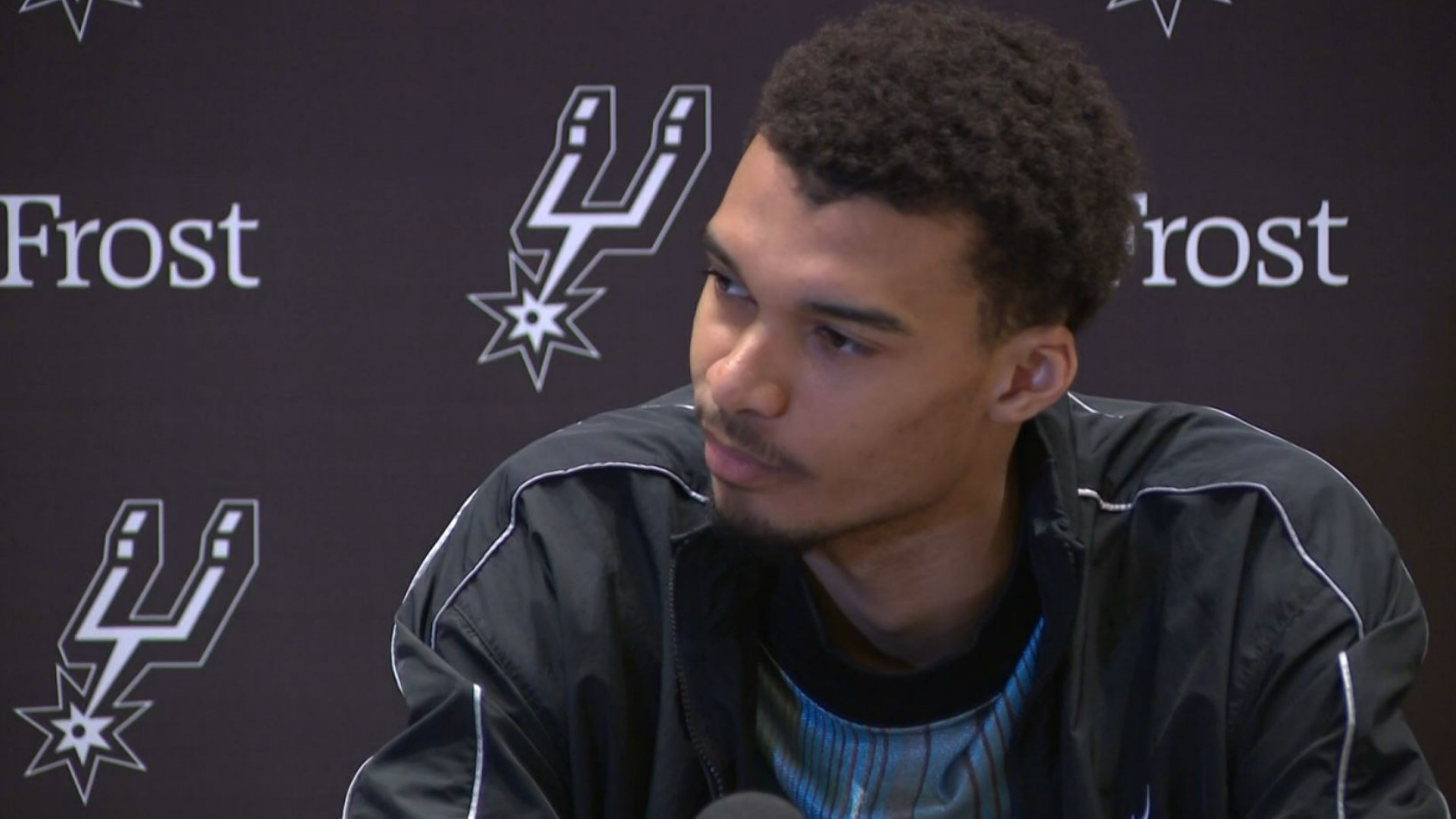
For the better part of two seasons, the league’s marketing engine has tried to sell the cleanest storyline in basketball: two impossibly long, impossibly skilled young bigs, Victor Wembanyama and Chet Holmgren, destined to define an era by trading jabs, trophies and TikTok highlights.
Lou Williams isn’t buying the premise anymore. Not because the matchups aren’t real, or because the games haven’t been spicy. He’s rejecting it because, in his mind, the debate has already moved on to a different weight class.
“There’s levels to this conversation,” Williams said on Run It Back. “The real rivalry is gonna be SGA and Wemby. Those are the MVP candidates. Why would a MVP candidate have a rivalry with a guy who’s not in that conversation.”
Lou Williams says Victor Wembanyama’s rival should be SGA, not Chet Holmgren: “There’s levels to this conversation. The real rivalry is gonna be SGA and Wemby. Those are the MVP candidates. Why would a MVP candidate have a rivalry with a guy who’s not in that… pic.twitter.com/zb4EnWIKq0
— The Hoops Log (@NBAFollowRadar) December 29, 2025
It’s a line that cuts straight through the current Wemby-vs.-Chet discourse, and it’s arriving at a moment when Spurs–Thunder games have stopped feeling like a novelty and started reading like a referendum. San Antonio beat Oklahoma City again on Christmas Day, 117–102, their third win over the Thunder this season, with De’Aaron Fox leading the scoring and Wembanyama posting 19 points and 11 rebounds in his sixth game back from injury.
The bigger point Williams is making isn’t that Holmgren doesn’t matter. It’s that Oklahoma City’s identity, ceiling, and award-season gravity still orbit Shai Gilgeous-Alexander, and that the most meaningful “rivalry” is usually the one that lives at the top of the ballot, not at the top of the height chart.
That argument is supported by how the league itself is framing the season. In the NBA’s most recent Kia MVP Ladder update, Nikola Jokić sits at No. 1 and Gilgeous-Alexander at No. 2, with SGA’s listed season line at 32.4 points, 4.7 rebounds and 6.4 assists. The same MVP Ladder has Wembanyama up to No. 6, explicitly described as a “high riser”.
So when Williams says “MVP candidates,” he’s not just trying to be provocative. He’s pointing at the lane the league is already opening: Gilgeous-Alexander as the established, ruthlessly efficient engine of a title-proven contender, and Wembanyama as the sport-warping outlier who can drag a franchise into the kind of relevance where every national TV window becomes a measuring stick.
And the Holmgren piece? Ironically, Wembanyama himself has done as much as anyone to pour cold water on that framing. Asked in French after the Christmas win whether he considers Holmgren a rival, Wembanyama answered:
“No, I don’t think about that. At least from a basketball standpoint, there’s no comparison.”
That’s part dismissal, part flex, and part clue to what’s really happening here. The Spurs and Thunder can be a rivalry without forcing it into a “mirror matchup” template. San Antonio’s rise has come with real tactical answers for OKC, real physical discomfort, and real consequences in the standings conversation, enough that even national columns are already treating Spurs–Thunder as the matchup that changed the mood of the season.
Williams’ take simply reframes the center of gravity: Holmgren and Wembanyama can be the aesthetic clash, the positional curiosity, the future-of-bigs laboratory. But if you’re asking which competition is going to matter when the league starts engraving narratives onto hardware, he’s calling his shot now.
“There’s levels to this conversation,” he said, and in the NBA, the top level is always the same: the guy who has the ball at the end, the guy who bends defenses for 82 games, the guy whose name sits on the first line of the MVP ladder.
