
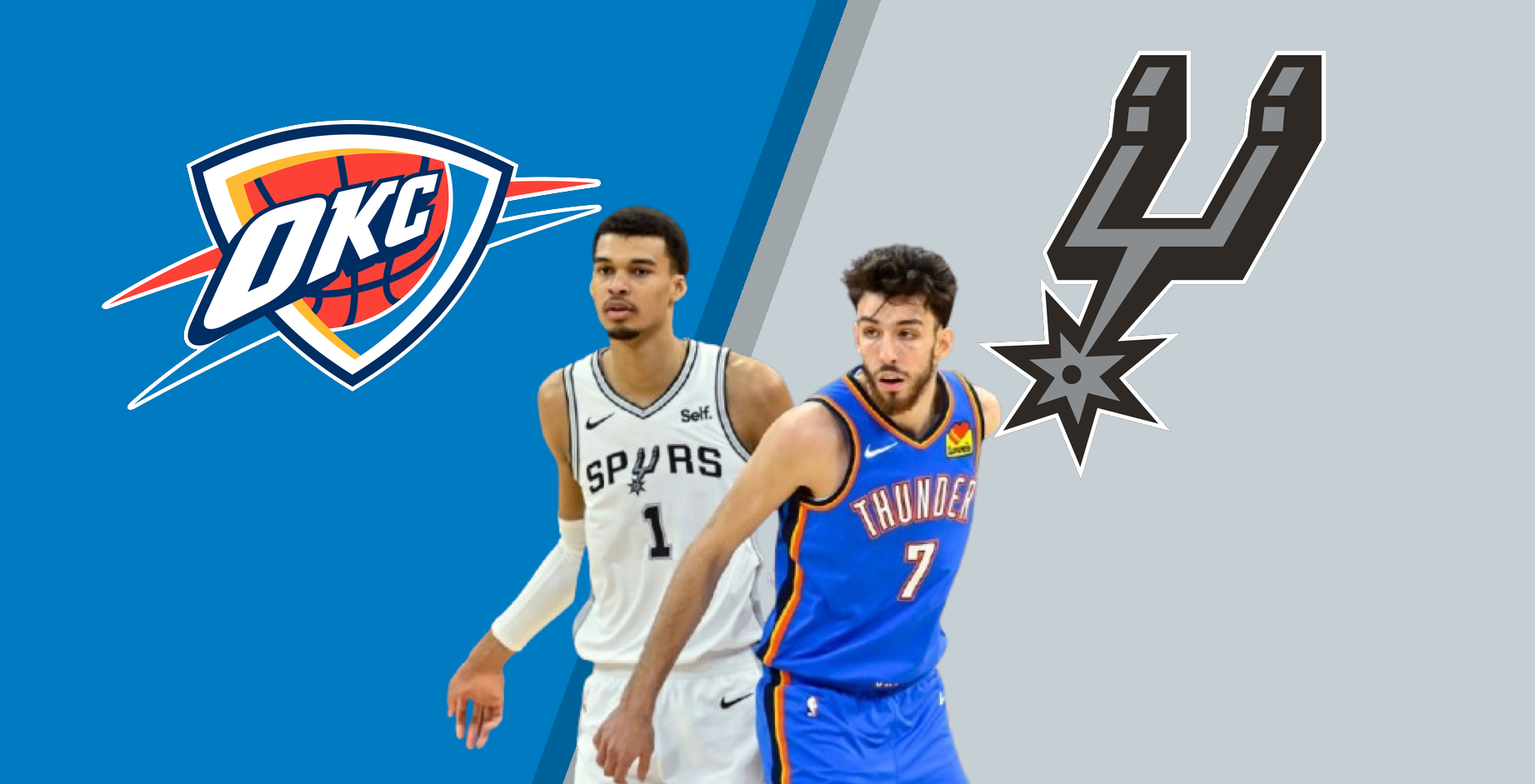
Dirk Nowitzki has never been the type to police personality. He made a Hall of Fame career out of letting his game do the talking, and he generally treats the league’s next generation with the kind of distance that only true icons can afford. That’s why his reaction to Victor Wembanyama’s pregame comments about Chet Holmgren landed so loudly: it wasn’t a “get off my lawn” lecture. It was a pointed reminder about respect, context, and what rivalries are supposed to sound like when they’re real.
The moment started with a question that’s become unavoidable whenever Wembanyama and Holmgren share a floor. In an interview that aired on Amazon Prime Video ahead of the NBA Cup semifinal between San Antonio and Oklahoma City, Wembanyama was asked what he and Holmgren “force each other to tap into” when they face off. Wembanyama pivoted away from the head-to-head framing and answered through the Thunder’s biggest gravity well: Shai Gilgeous-Alexander.
“The reigning MVP is on that court, so he’s our main focus,” Wembanyama said. “Anybody is hard to guard when you have to help on the MVP.”
Wemby on his matchup with Chet:
“The MVP’s on that court, he is our main focus. Anybody is hard to guard when you have to help on the MVP” pic.twitter.com/10LOdx3lw4
— Oh No He Didn’t (@ohnohedidnt24) December 14, 2025
On its face, the line is defensible. It’s also strategically sound. If you’re preparing for Oklahoma City, Gilgeous-Alexander is the fulcrum. But Nowitzki didn’t critique the basketball logic. He critiqued the tone and the choice. Speaking before the Spurs-Thunder game, Nowitzki said he “didn’t love” Wembanyama’s answer, adding that he wished Wembanyama would have “given [Holmgren] a little credit.”
Nowitzki even offered an example of how Wembanyama could have praised SGA while still acknowledging Holmgren’s growth and competitiveness. Then he delivered the line that made the clip travel: it felt “too swaggy, too dismissive of Chet.” And, with a grin you could hear through the words, he concluded: “Get the popcorn out.”
Dirk did not like Wemby answer on Chet
“I wish he would’ve gave him a little credit. I didn’t love that answer. To me it was too swaggy, too dismissive” pic.twitter.com/kC0pOxIRSg
— NBA Courtside (@NBA__Courtside) December 14, 2025
That’s what makes this interesting. Dirk wasn’t acting like a scold; he was acting like a storyteller, and like a former superstar who understands how rivalries are built. Because whether Wembanyama intended it or not, his quote effectively demoted Holmgren from co-lead to supporting actor in the most anticipated big-man matchup of this era. In a league that runs on slights, real, imagined, or opportunistically repurposed, that kind of phrasing doesn’t disappear. It becomes fuel.
And the timing amplified everything. The comments aired right as the NBA Cup was ramping into its Las Vegas climax, with the Spurs and Thunder colliding in a semifinal that already carried stakes. Wembanyama returned from a calf strain on a minutes restriction and still tilted the game, helping San Antonio beat Oklahoma City 111–109 to reach the NBA Cup final. In that setting, a “too swaggy” soundbite isn’t just talk-radio fodder. It’s part of the theater.
Nowitzki’s critique also reflects something older-school players often value: you can be confident without flattening the opponent. You can say “the MVP is the focus” and still recognize that Holmgren isn’t just “anybody.” He’s a foundational piece on an elite team, and, crucially for Dirk’s point, he’s the one opponent in that matchup who mirrors Wembanyama’s own unicorn status. When you sidestep that, you aren’t only dodging bulletin-board material; you’re also dodging the central premise that sells the game.
But here’s the twist: the very thing Dirk said he didn’t love is the exact ingredient that makes modern rivalries pop. The NBA doesn’t need fake beef. It needs contrast, different temperaments, different public voices, different ways of framing competition. Wembanyama leaning into star gravity and letting Holmgren’s name sit unsaid creates a tension the league can market without manufacturing anything. Holmgren doesn’t have to “hate” him. Fans just have to feel like the matchup means something beyond a normal Tuesday.
So Dirk’s “popcorn” line wasn’t just a joke. It was a diagnosis. The league’s best rivalries don’t require animosity; they require an edge. On one side you have Wembanyama, already comfortable speaking like a franchise centerpiece, comfortable re-centering the conversation around the biggest prize on the floor. On the other you have Holmgren, a competitor in his own right, now handed an easy narrative hook: prove you’re not an afterthought.
In a season where the NBA Cup has been searching for signature moments, this one qualified, not because it was nasty, but because it was sharp. Nowitzki didn’t tell Wembanyama to tone it down. He simply called it what it sounded like, and in doing so, he raised the stakes for the next chapter.
