
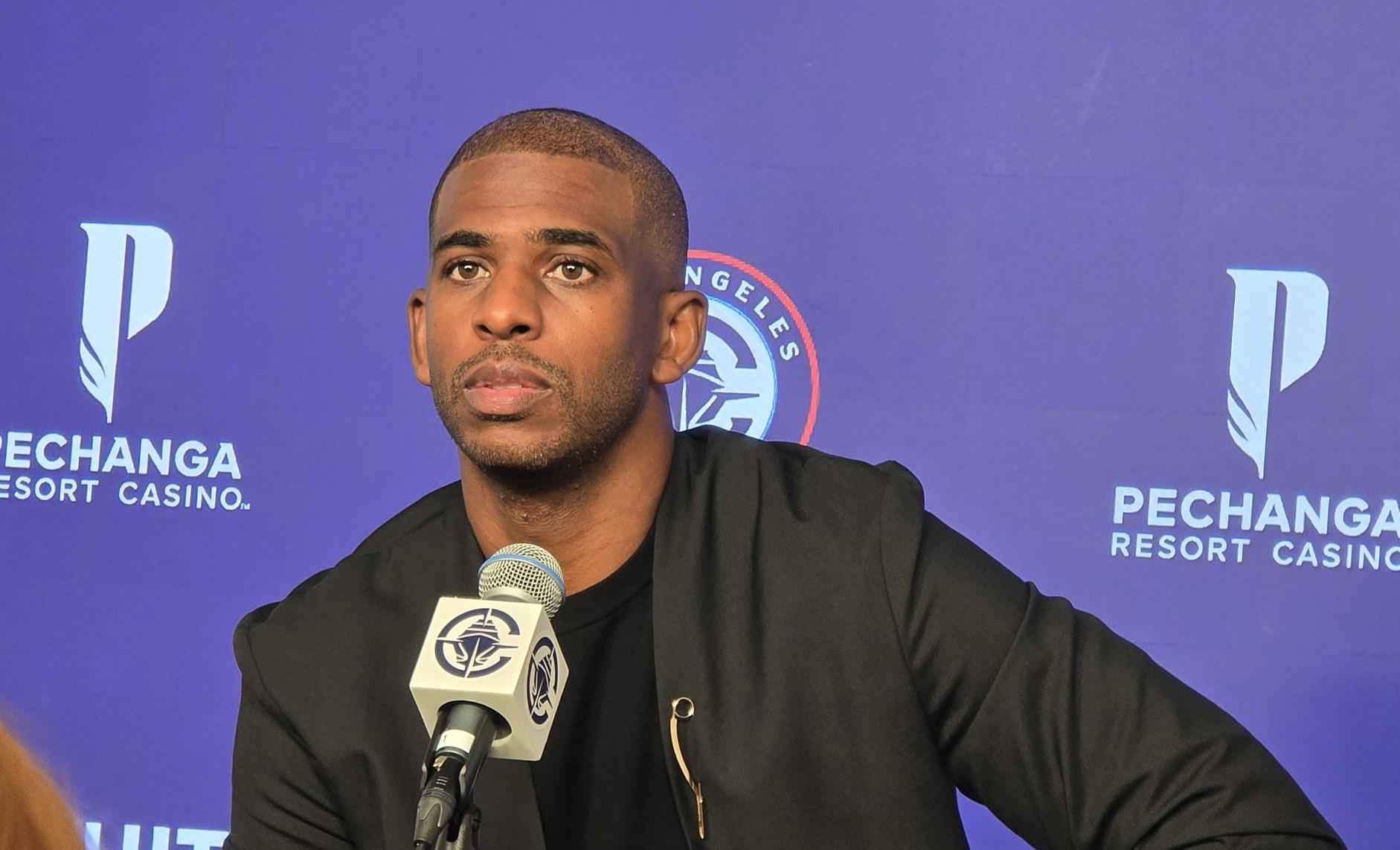
On December 3, 2025, the Clippers quietly, and suddenly, parted ways with Chris Paul. The news broke just before dawn: Paul shared on Instagram that he was being sent home from a road trip. A short time later, team president of basketball operations Lawrence Frank confirmed Paul was no longer part of the roster.
This isn’t just a bad look. It’s a disgrace, especially for a franchise that once depended on Paul to provide identity, leadership, and credibility. The Clippers will say they had their reasons. But those reasons, poor record, internal friction, mounting losses, are symptoms of deeper mismanagement. And those are on them.
This season, the Clippers entered hoping to give Paul one final send-off: the veteran legend signed a one-year contract worth $3.6 million, aiming to retire as a Clipper. Instead, what he got was a messy divorce, without warning, without dignity, and mid-season while the team was miles from contention.
The split came after weeks of tension between Paul and head coach Ty Lue. Paul had reportedly been outspoken, holding management, coaches and even teammates accountable in a way the team felt had become disruptive. At one point he requested a meeting with Lue to address rumors of being cast as a “negative locker-room presence.” Lue refused.
The organization signed a legendary competitor known for intensity and leadership, then treated that very DNA as a problem when the going got tough. That’s not because Paul failed to adjust, that’s because the front office failed to manage a star properly.
In the statement, Lawrence Frank insisted the move wasn’t about using Paul as a scapegoat, and that Paul’s legacy “stands. But let’s be clear: the decision to cut ties came in the middle of the night, while the team was on the road. Paul had to inform his own fans via social media before the organization publicly acknowledged anything. That method, cold, abrupt, infamously impersonal, speaks volumes about how little regard they truly had for their own legend.
This isn’t just bad optics. It’s a sign of deeper dysfunction: lack of respect, lack of communication, and lack of leadership from those who are supposed to steer the franchise. Instead of building around a veteran leader in his final season, the Clippers botched his send-off and tarnished what could have been a respectful goodbye tour.
By ending Paul’s second Clippers stint this way, the front office confirmed what many already suspected: they still don’t grasp how to manage culture, history, and star power. They retain all the power, and yet, repeatedly, they treat their own icons as expendable commodities rather than legacy-holders.
Paul didn’t age out gracefully. He didn’t vanish. He was discarded. And that decision reveals far more about the city office upstairs than about the man who carried the franchise for years.
For a team that once rested its identity on Paul’s leadership, from the early “Lob City” days to now, this isn’t just a failed experiment. It’s a statement: culture and commitment mean little if they don’t come with organizational backbone.
The Clippers had a chance to give Chris Paul a proper send-off. Instead, they offered him a mid-season exit and a headline that will stain their reputation longer than any losing streak ever could.
Greatness is not always easy to manage. History shows that Tim Duncan needed structure, Michael Jordan needed an aligned front office, Kobe Bryant needed accountability and partners who could withstand his intensity, and LeBron James has always required infrastructure capable of maximizing his vision.
Chris Paul belonged in that lineage, a brilliant, uncompromising leader whose presence alone raises stakes, standards, and expectations. The Clippers wanted that version of him on the court. They were less prepared for what it meant behind closed doors.
