
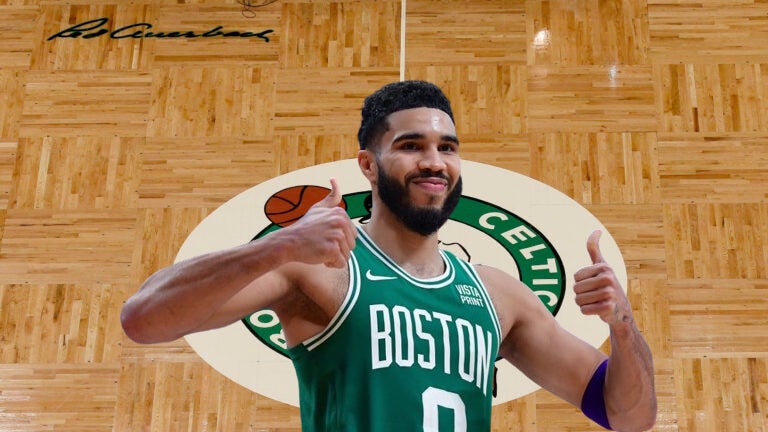
When Jayson Tatum collapsed in Game 4 of the Eastern Conference Semifinals against the New York Knicks, clutching his right leg, the silence inside TD Garden told the story. A ruptured Achilles tendon. One of the most feared injuries in sports had struck down the Boston Celtics’ franchise cornerstone. For many, it raised doubts about whether Tatum would ever return to his All-NBA form.
But according to his surgeon, Dr. Martin O’Malley, Tatum’s recovery has been nothing short of extraordinary.
“I don’t think I’ve seen a person’s calf look as strong as his,” O’Malley told People. “At six or eight weeks he was doing double heel rises. He worked his calf so hard that the side effect of loss of strength, I don’t think he’s going to have any.”
Achilles tears are notorious for robbing players of explosiveness and lateral quickness; two traits central to Tatum’s game. Yet O’Malley’s comments suggest that the 27-year-old forward is rewriting the typical recovery script. By the two-month mark, Tatum was already performing exercises that most patients don’t attempt until much later in the rehab process.
Tatum has admitted that the injury initially left him devastated. In interviews, he confessed to breaking down in tears and even questioning whether his career might be over. But his relentless work ethic, six days a week of rehab, has fueled a comeback that now feels increasingly possible.
“I don’t go to rehab six days a week for nothing,” Tatum said recently, hinting at his determination to return before the end of the 2025–26 season.
The Celtics, who reshaped their roster this offseason, have been cautious about setting a timeline. Officially, Tatum is expected to miss most, if not all, of the season. But his progress has sparked hope that he could make a surprise return late in the year, potentially altering Boston’s playoff outlook.
For fans, O’Malley’s words are more than medical jargon, they’re a lifeline. They suggest that the player who averaged 26.8 points, 8.7 rebounds, and 6.0 assists last season may not only come back, but come back without the decline that often follows such an injury.
