
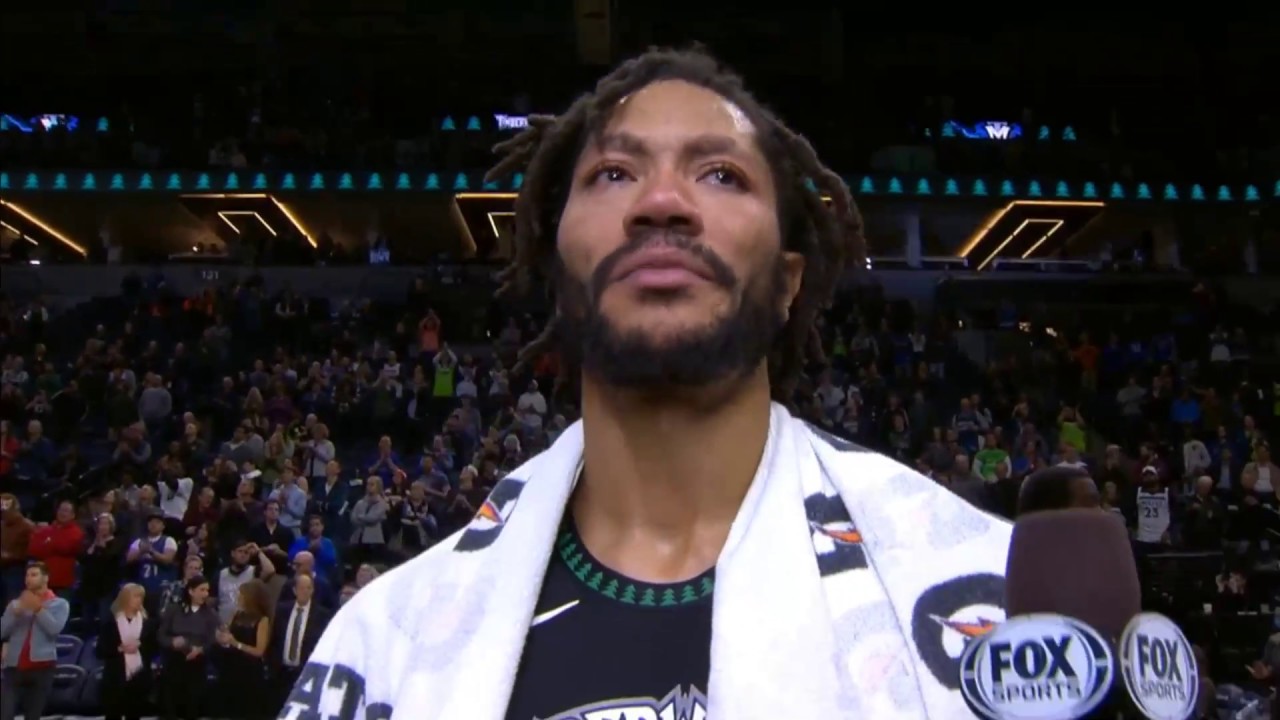
On October 31, 2018, the Minnesota Timberwolves’ Target Center became the stage for one of the most emotional performances in recent NBA history. Derrick Rose, the youngest MVP in league history, had been fighting for relevance after years of devastating knee injuries and team changes. That night, against the Utah Jazz, he didn’t just score points, he reclaimed his place in the league.
Rose entered the game under unusual circumstances. Both Jimmy Butler and Jeff Teague were sidelined, leaving the Wolves shorthanded. For Rose, it was an opportunity, but also a test. By the final buzzer, he had delivered a career-high 50 points on 19-of-31 shooting, including 4-of-7 from beyond the arc, along with six assists, four rebounds in a 128–125 victory.
When the horn sounded, Rose collapsed into tears as teammates surrounded him. The crowd erupted in “MVP” chants, a sound that had once defined his prime in Chicago.
“That game was perfect timing,” Rose reflected during a recent visit to Manila. “It stamped me back in the league. If I didn’t have that game, I probably would’ve been out a year later. Instead, it gave me another five or six years.”
The performance was more than a statistical milestone. It was a reminder of the player Rose had been; explosive, fearless, and capable of taking over a game. That single night shifted the narrative from a former star fading away to a veteran with plenty left in the tank.
Following that season, Rose averaged 18 points over 51 games and nearly won Sixth Man of the Year. The resurgence led to a two-year deal with the Detroit Pistons, where he continued to produce at a high level, and later a return to the New York Knicks, where he became a fan favorite once again.
Now, with the Chicago Bulls preparing to retire his No. 1 jersey, Rose can look back knowing that Halloween night in 2018 wasn’t just a highlight, it was a lifeline. In his own words, it reestablished him in the NBA and allowed him to write the final chapters of his career on his own terms.
